Innovation
The next generation must do more with less. Noak rethinks and remakes materials, cell architectures, interconnections and modules bringing tandem PV
into industrial reality. Noak is rooted in the world-leading R&D of Imec and UHasselt.
Tandem
01
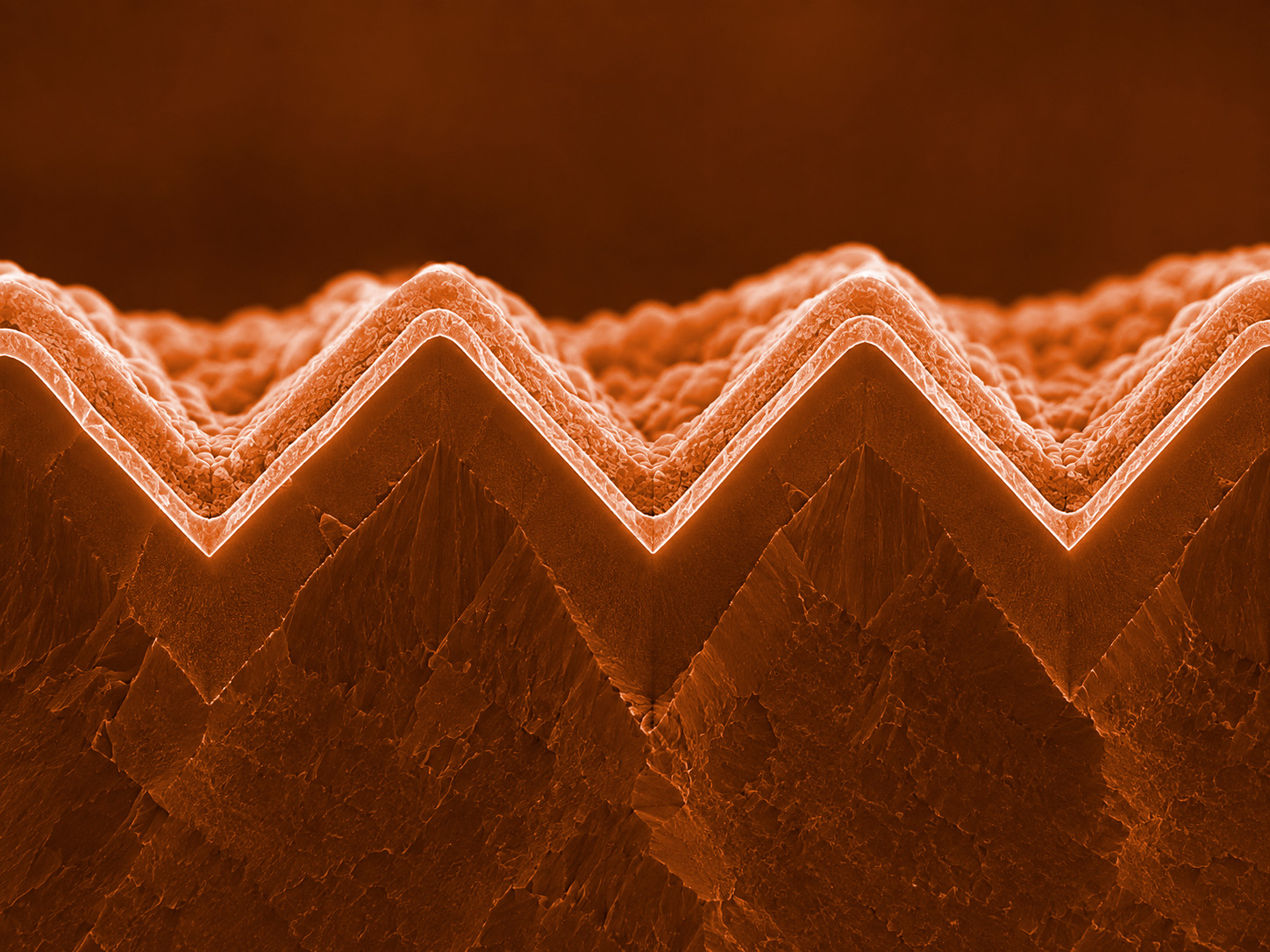
Silicon has driven the first generation of solar growth, but it is nearing its practical efficiency limit of 27%. Perovskite-silicon tandem technology can break the silicon efficiency ceiling with conversion efficiency above 35%.
The perovskite top cell absorbs higher-energy blue and green light, while lower-energy red and near-infrared light passes through to the silicon cell below. This allows the tandem cell to convert more of the available sunlight into electricity. At the same time, the technology builds on the maturity and scalability of silicon, with processing steps that can be integrated with existing silicon manufacturing.
27%
Practical efficiency limit of conventional silicon
35%
Potential efficiency of perovskite–silicon tandem

Platform
02
Noak develops its tandem on the world-class lab line of IUMAT and with partners for industry-grade piloting and scaling. It builds on its IP and innovation portfolio with agility, aligning its roadmap with evolving market realities
Scalable processes
Noak optimizes and integrates solution-based, hybrid and vacuum deposition processes focusing on industrial scalability.
Perovskite layer stack
At the core is a unique perovskite layer stack built around proprietary chemical compositions and scalable deposition techniques. Passivation and interface engineering are used to maintain performance and limit degradation.
3D woven interconnect
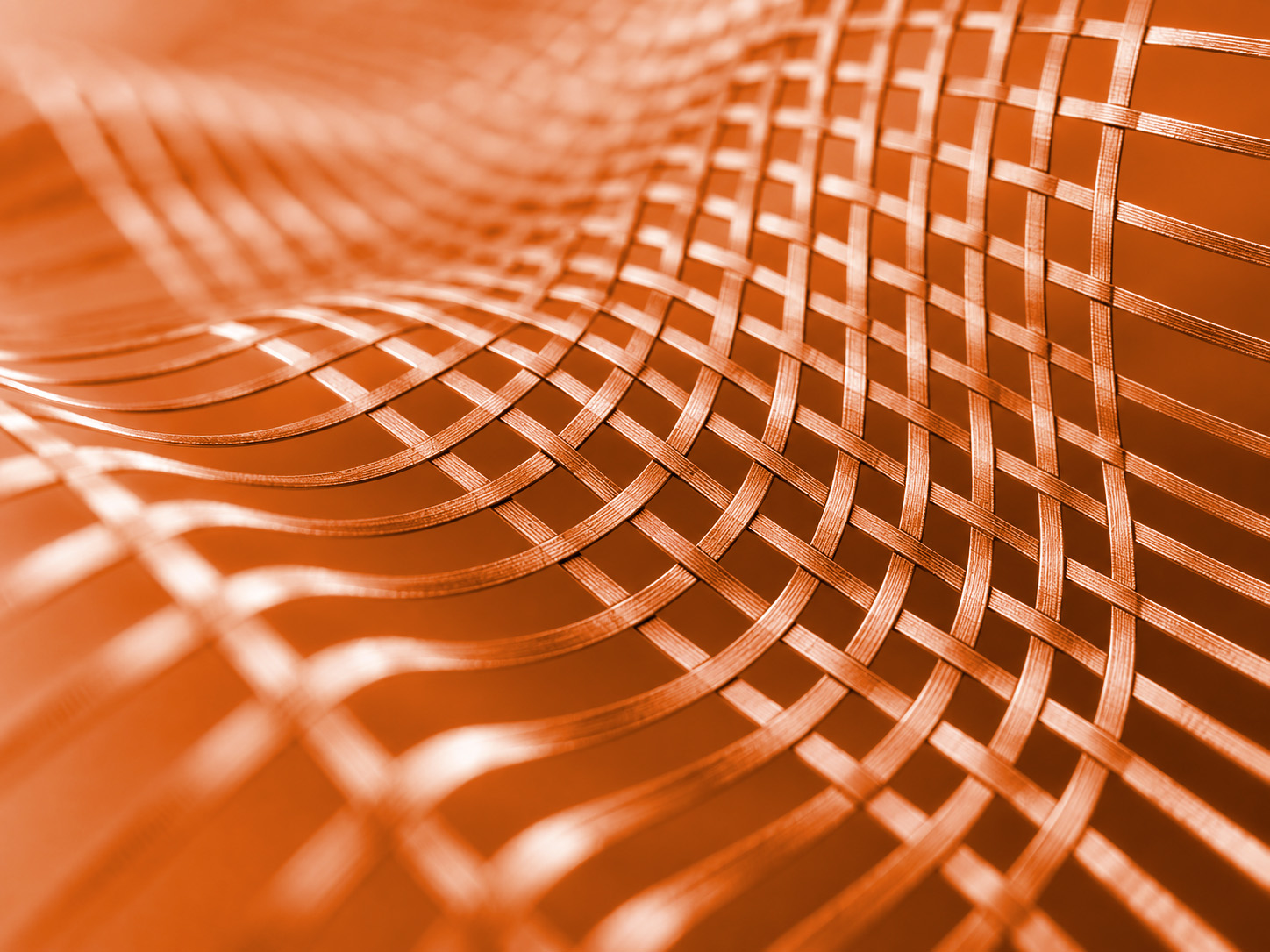
Noak’s 3D woven interconnect replaces conventional front-side metallization with a flexible back-contact foil. This removes shading from the front of the cell, reduces thermal stress during lamination and supports bifacial operation and easier disassembly.
Tile-based design
By dividing the cell into smaller sub-cells that can be connected in different ways, the tile-based design improves electrical flexibility and resilience to partial shading, while substantially reducing the use of critical raw materials and facilitating the use of alternative materials.
Reliability
03
Long-term stability is the foundation of the commercial success of tandem PV. Just as with a car, reliability matters just as much as performance. Noak holds the best stability results of larger surface modules, externally validated and with extensive outdoor operations. NOAK aims to set the industry standard and reach bankability of tandem PV.
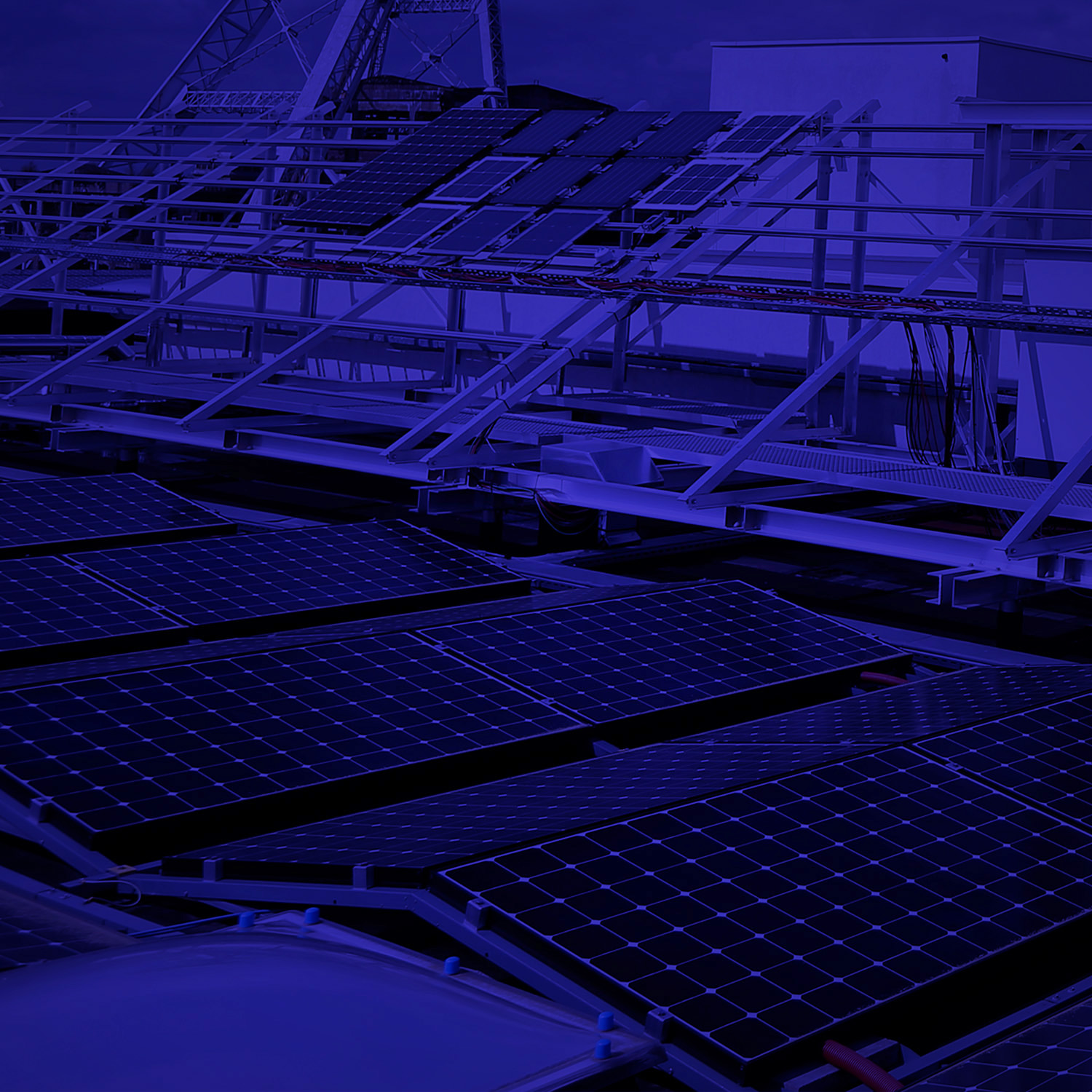
While most stability claims rely on accelerated laboratory testing, NOAK has accumulated five years of outdoor operation across 11 test sites on three continents, withstanding intense sunlight, heavy rain, extreme heat, and sub-zero temperatures. Noak has built the industry's most extensive real-world performance dataset - giving confidence that extends far beyond accelerated laboratory testing.
Circularity
04
Solar should become circular. Noak designs for disassembly and develops debonding on demand concepts. To translate its vision into practice, Noak partners with its supply chain to work towards the use of certified recycled metals, ensuring that sustainability is embedded from the very first commercial products.

(01)
Design for disassembly
Components are designed to be separated at the end of life. Concepts are explored such as ‘debonding on demand’, where bonded materials are separated when triggered on demand, without damaging.
(02)
Away from critical raw materials
Lower current densities and shorter interconnection lengths drive shift to other metals, even carbon-based interconnections.
(03)
Permanent material bank
Long term goals I to move PV from a consumable product towards a permanent material bank.